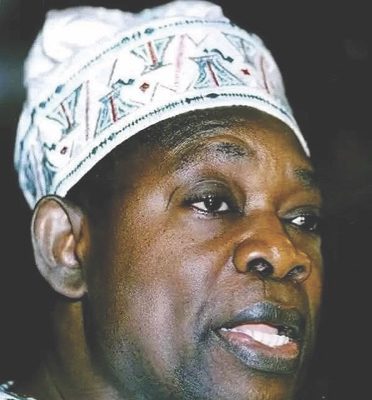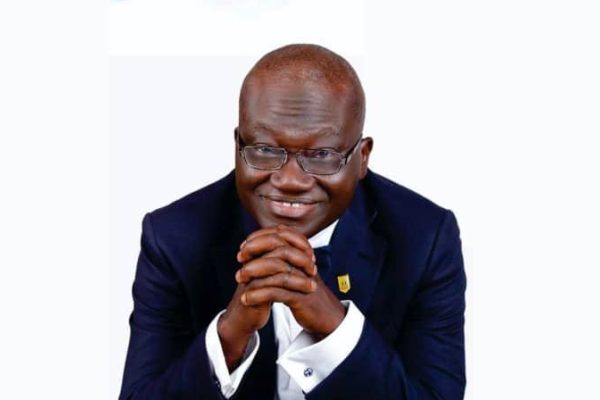
While the Senate’s move to set aside its committee’s directive for the arrest of the former Group Chief Executive Officer (GCEO) of Nigerian National Petroleum Company Limited (NNPCL), Mele Kyari, might be procedurally correct, it is likely to send a wrong signal concerning transparency and accountability in the management of public funds. The Senate Committee on Public Accounts ordered the arrest of Kyari, who did not honour several invitations to appear before the committee to explain why and how N210 trillion was not accounted for in the company’s audit report covering 2017 to 2023. But the Senate said the committee didn’t have the power to order that. Nevertheless, it is important in the interests of the public and for the integrity of the legislature that the matter is not closed at that level.
Senator Adams Oshiomhole, who has commented publicly in support of the action of the committee was right to remind Nigerians that demanding accountability for public funds was not an act of hostility to the government. “Indeed, accountability, transparency and probity are the very essence of democratic governance. Democracies succeed not by dodging hard questions, but by having institutions with the courage and independence to ask them.
The controversy surrounding the NNPCL was not the result of partisan politics or media speculation. It came from reports from the Office of the Auditor-General of the Federation between 2017 and 2023, when the national oil company was led by Mele Kyari. Reports allegedly had 19 audit queries on transactions and accounting entries worth over N210 trillion. The figures were themselves taken from NNPCL’s own audited financial statements prepared by internationally recognised auditors.
The Senate Committee on Public Accounts faced these observations that the funds were not accounted for, and embarked on what should be considered a routine constitutional exercise. It demanded that the corporation explain itself. The NNPCL said accrued expenses were N103 trillion and receivables N107 trillion.
The missing funds are cash calls requested by the joint venture (JV) partners and settlements to the JVs, the company’s chief financial officer, Adedapo Segun, said. He spoke at a session of the Senate Committee on Public Accounts, chaired by Aliyu Wadada, after the committee raised alarm over the money. According to Segun: “The N103 trillion and N107 trillion are joint venture cash calls that have been requested by the JV operators and JV cash call payments made by NNPCL and are yet to be reconciled because governance procedures were not done at that time…That is why you see the description showing the two items would be washed out because it is two sides of the same transaction which is the cash calls by JV partners and the settlement by NNPCL.”
But dissatisfied with the written explanations, the committee asked for oral testimony from current and former officials. Such insistence was neither overdone nor vindictive. No questioning, no supervision. No one has alleged, let alone proven, that N210 trillion was stolen. No court has convicted Kyari of any wrong-doing. No forensic audit has found that public funds have gone missing. But these realities do not mitigate the responsibility to explain. The fact is, innocence is best proved by openness, not by silence.
Read Also: ADC Faction Confirms 2027 Candidate Upload, Announces Barkindo As Vice Presidential Pick
It is therefore disturbing that after the committee reportedly sat nine times without Kyari’s appearance and finally ordered his arrest to force his attendance, the Senate itself suddenly reversed course. Just 48 hours later, the upper chamber publicly dissociated itself from the committee, rebuked Oshiomhole and stopped the arrest process. Senate Leader Opeyemi Bamidele said the committee had no power to issue a warrant and warned against circumventing due process.
It is essential to have due process. No democratic institution should be above the law. But procedural concerns should not provide a convenient refuge for institutional retreat. The issue is not whether the committee adopted the correct legal mechanism; the issue is whether the Senate itself has the will to pursue a case involving the management of resources on which the lives and welfare of millions of Nigerians depend, or whether the Senate is painting a picture of itself as not willing to seek clarification in huge public spending shrouded in haze. Or is the Senate satisfied with NNPCL’s scanty explanation on the money?
The reversal raises disturbing questions. Why would the Senate suddenly appear reluctant to pursue an investigation that stemmed from constitutional audit reports? Why should a matter of such monumental public importance get caught up in internal legislative politics? Why should the National Assembly, constitutionally vested with the sacred duty of oversight, seem to shy away in the face of resistance from those it is empowered to scrutinise?
Unfortunately that impression is being created. It indicates inconsistency where firmness is needed. It fuels concerns that politics are triumphing over accountability. Such perceptions are dangerous in a country where public confidence in institutions has already been badly eroded.


The Senate should understand that its credibility is on trial no less than that of the NNPCL. Nigerians deserve answers not confusions. The constitutional scheme is clear. Government agencies and public corporations are required to give accounts to the Auditor-General, who reports to the National Assembly. Subjecting legislation to scrutiny is not optional; it is a constitutional imperative. It is the duty of parliament to seek clarification where explanations are found by auditors to be unsatisfactory.
Human Rights lawyer and Senior Advocate of Nigeria, Femi Falana has now approached the Federal High Court demanding that the Senate should release the report on the alleged discrepancies. His move comes amid rising public pressure for transparency. In terms of public resources, secrecy breeds suspicion; openness breeds trust.
Kyari should appear before the Senate and answer the questions that arose from the audit observations. If the Senate must rely on other mechanisms to assure his appearance, it should. What it must not do is frustrate or abandon the inquiry. You can’t shit on nine invitations and expect there to be no consequences. No public officer, present or past, should be allowed to place himself above the institutions created by the Constitution.
This is not about personalities. It is bigger than Kyari, bigger than Oshiomhole and even bigger than the Tinubu’s administration. It is about the willingness of Nigeria’s democratic institutions to hold those in power to account. When a legislature shirks its duty to oversee, it undermines democracy itself.
Transparency and responsible management of public resources continue to be essential for national development. We cannot allow the Senate to be an impediment to those ideals. It must not make a mockery of constitutional oversight. It shall not blink.
The question should be pursued. The questions are to be solved. And if there is an eventual finding of wrongdoing, those responsible must be held accountable to the consequences of the law. Any other course would only perpetuate the cynical belief that in Nigeria, accountability is pursued vigorously only until powerful interests become uncomfortable. That would be a tragedy not only for the Senate, but for democracy itself.