
By Ahmed Yakubu
For years, families in Borno State and across the North-East have measured the seriousness of an illness not only by its clinical severity but by the distance it forced them to travel.
A diagnosis that required an MRI, a complex surgical intervention, or specialist follow-up often meant journeys to the University of Maiduguri Federal Teaching Hospital when beds were available, or further afield to Kano, Abuja, Lagos, or even outside the country. The financial cost, the separation from family, and the interruption of treatment became part of the disease itself.
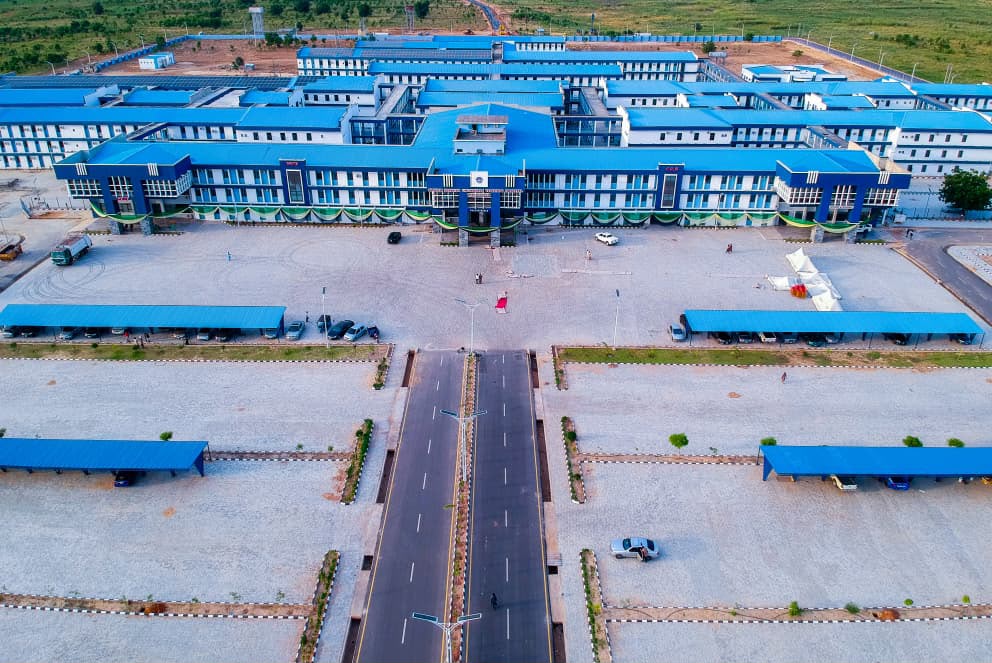
The commissioning of the 400-bed Kashim Ibrahim University Teaching Hospital in Maiduguri in late October 2026 does not erase that history overnight. It does, however, create a practical alternative that did not exist at the same scale under state ownership.
Vice-President Kashim Shettima formally opened the facility, which sits along the Maiduguri–Damaturu Road and is linked to Kashim Ibrahim University (the institution formerly known as Borno State University). Governor Babagana Umara Zulum’s administration drove the project from construction through equipping and staffing.
The hospital is organised around 13 specialist departments that include diagnostic services, surgery, emergency care, paediatrics, internal medicine and physiotherapy. Its imaging capacity comprises a 1.5-tesla MRI scanner, a 160-slice CT scanner, conventional and mobile X-ray units, 4D ultrasound machines, a fluoroscopy system and digital mammography. Supporting elements of the complex include a medical college, students’ hostel, a 200-unit staff residential estate and an oxygen plant.
By mid-2026 the physical works stood above 90 per cent completion, major equipment had been delivered, and roughly 350 medical, administrative and support personnel had already been recruited. The October commissioning marked the formal transition to an operational institution.
These features matter because they address specific reasons people leave the state for care. Advanced imaging that once required travel can now be performed locally. Certain surgical and critical-care pathways become feasible without automatic referral outside Borno. The oxygen plant reduces one chronic point of vulnerability in intensive care. None of this guarantees that every patient will stay.
Equipment must remain functional, specialists must be present in sufficient numbers, and the hospital must maintain reliable links with primary and secondary facilities so that patients reach it at the right moment.
READ ALSO:
- Group hails Nuhu Ribadu at 66, Commends Strategic Coordination of Nigeria’s Counter-Terrorism Effort
- Shun sentiments, be strategic for Tinubu’s re-election, Soludo advises S’East
- Northern leaders’ strategic support for President Tinubu
Governor Zulum has indicated that services will be offered at affordable rather than free rates, under management systems intended to support long-term operation without excluding those who cannot pay full commercial prices.
The hospital’s second function is educational. It is expected to serve as the principal clinical training site for the College of Health Sciences at Kashim Ibrahim University. Medical students, resident doctors, nurses, midwives, pharmacists, laboratory scientists and physiotherapists will gain supervised experience inside a modern facility rather than relying solely on external centres. In a region that has lost health workers to better-resourced parts of the country and abroad, local training capacity is not a side benefit; it is one of the main mechanisms for retaining expertise.
The university’s own renaming in 2025, in honour of Sir Kashim Ibrahim, the first Governor of the Northern Region, places the teaching hospital within a deliberate institutional identity. Early signs of wider interest include collaborative discussions involving the Nigerian Army University Biu on expanding medical education capacity in the state.



KIUTH forms one layer of a larger pattern of health investment under the Zulum administration. Primary healthcare centres have been rehabilitated or newly built in significant numbers, including solar-powered facilities in resettled communities. General hospitals have been upgraded. Free dialysis services have been introduced. Scholarships have supported training in nursing and midwifery. A state orthopaedic hospital has been under construction, and the state has also contributed resources to the National Orthopaedic Hospital in Azare. Health insurance coverage has been expanded for civil servants and vulnerable groups.
These measures do not eliminate the need for a tertiary centre, but they create a referral ladder that can feed patients into the teaching hospital instead of sending them immediately outside the state.
The practical test begins now. Advanced machines require continuous maintenance, stable power, trained biomedical support and uninterrupted supplies of consumables. Specialist doctors and other professionals must be retained against competition from other states and private facilities.
Clinical standards, infection control, transparent billing and functioning referral arrangements will determine whether public confidence grows or stalls. If these elements hold, a measurable share of patients who previously travelled for imaging, certain surgeries and specialist consultations can be treated closer to home. Families save on transport and lodging. Local clinicians accumulate experience. The North-East gains a stronger training base. Over time the hospital could also attract patients from neighbouring states and communities around Lake Chad, provided quality and reliability are consistent.
Infrastructure of this scale is easy to celebrate at commissioning and easy to neglect afterwards. The difference between a lasting reduction in medical travel and another under-used facility will be decided in the ordinary work of the next several years: whether the MRI and CT scanners stay online, whether the oxygen plant meets demand, whether the recruited staff remain, and whether patients from low-income households can actually access the services. Governor Zulum’s administration has placed a substantial public asset in Maiduguri. Its value will be settled by how many people receive timely, effective care inside Borno rather than by the size of the building alone.
Ahmed Yakubu writes on public policy and institutional development.
❤️ SUPPORT TALKJUDITH — HELP US GROW
Behind every story is time, effort and resources. Your support helps TalkJudith deliver timely news, reach more people and keep you informed.
Every contribution, no matter how small, makes a difference.
Together, we can do more!




1 Comment