
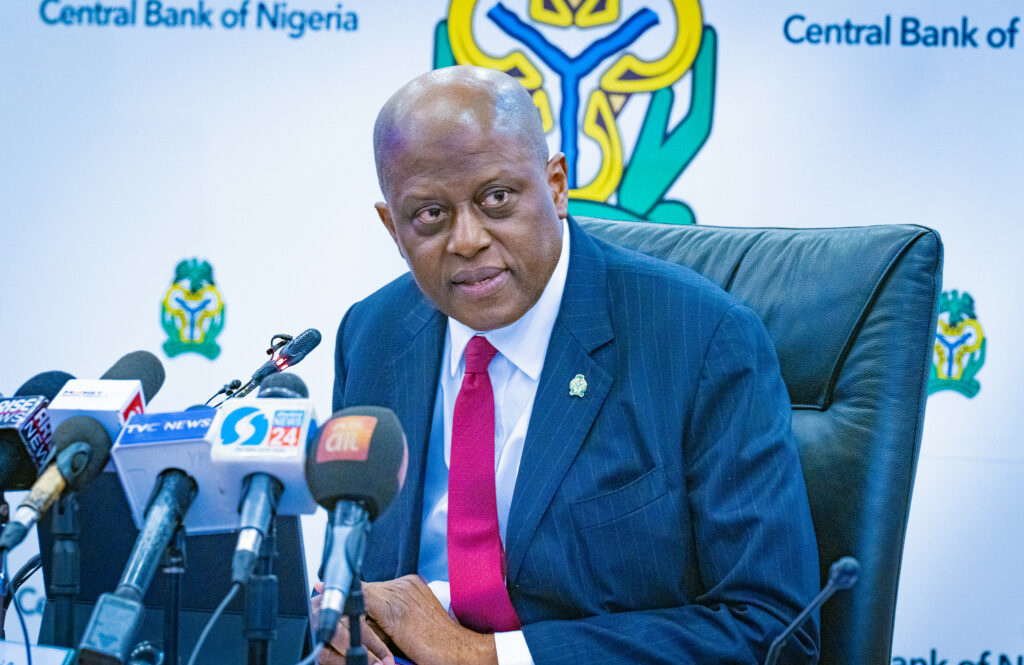
Governor, Central Bank of Nigeria (CBN), Olayemi Cardoso, has reiterated that the ₦100 and ₦200 notes are still legal tender in Nigeria.
However, he said the shortage of lower denomination notes was due to the increasing use of digital payments and changing factors of currency demand and supply.
Cardoso made the submission on Tuesday while speaking after the Monetary Policy Committee (MPC) meeting in Abuja, it was reported.
“The CBN has not withdrawn any denomination from circulation,” he said, urging Nigerians to continue to accept the ₦100 and ₦200 notes.
“Yes, they still are legal tender. “Let it be known that all other denominations remain legal tender until the central bank says otherwise.
As to the reason for there seeming to be fewer of them in circulation, it is for the most part a question of demand and supply. We see the financial ecosystem moving in the direction we want it to move in, more financial inclusion, more digitisation.
“As consumers shift increasingly to digital payment channels, demand for coins and lower denomination notes naturally decreases. “If there’s less demand for them, there’s less need to print and distribute them in large quantities,” Cardoso said.
He said the declining purchasing power of the lower-value notes has also contributed to their declining use.
“Of course, we have to also acknowledge that the devaluation of the currency has impacted the purchasing power of lower value notes. That’s a fact.




Read Also: 32 killed, over 200 displaced in prolonged farmer-herder crisis in Nasarawa community
But more importantly, he said, as financial inclusion expands and digital payments become part of daily life, fewer people will require these denominations.
Inflation Tendencies
The CBN is committed to single digit inflation even as external shocks have slowed the pace of disinflation, Cardoso said.
He said Nigeria should be able to meet the single-digit inflation target by 2027.
We need to remember where we are coming from. “We had 11 straight months of disinflation and by all indications we expected to be on the path to single-digit inflation where we wanted to be by early 2027 in terms of inflation,” he said.
“Unfortunately we’ve had some external shocks which were not predicted and have lasted a lot longer than anyone thought.
“As for the single-digit inflation target, we are committed to it,” he said.