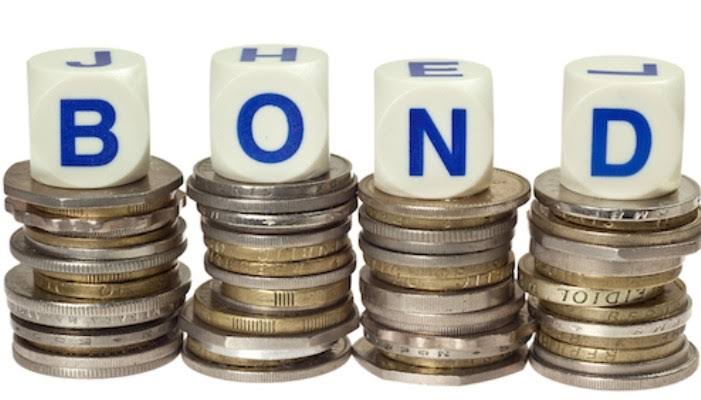
Data obtained by Daily Sun yesterday showed that the domestic financial system has been placed at the center of an increasingly difficult effort to finance the country’s widening fiscal needs as the federal government has raised almost N7.2 trillion through bond auctions so far this year.
The data showed the total raised by the Debt Management Office (DMO) did not include borrowing through treasury bills, sukuk and other instruments. But it offers an early glimpse of the scale of government reliance on banks, pension funds, asset managers and other local institutions as the country seeks to fund a N31.5 trillion budget deficit.
It said the budget provides for domestic borrowing of about N29 trillion. The DMO has so far raised less than a quarter of that target through bond auctions and has a large financing requirement for the rest of the year at the current pace. The question is not only whether investors have the capacity to absorb the supply, but whether the government can continue to raise money without driving up the cost of borrowing and crowding out credit for businesses and households.
At its last bond auction, the debt office sold N805.2 billion in competitive allotments across the January 2035, April 2037 and June 2038 maturities, below the N1.1 trillion on offer. But total sales increased to almost N1.6 trillion after N752.3 billion in non-competitive allotments.
Total subscriptions were N1.7 trillion translating to a bid-to-cover ratio of 2.1 times as against 1.9 times in the previous auction. Instead, the DMO appeared unwilling to take bids at what it considered to be rich yields.
The most demanded bond was the June 2038 bond which recorded bids of N821.3 billion against competitive sales of N631 billion. The DMO also sold N742.3 billion of the same instrument via non-competitive sales. Bids were as high as 19 per cent but the bond was sold at a marginal yield of 17.79 per cent.
This pattern was more evident in the January 2035 note. Investors bid N513.6 billion for the security but the DMO allotted N64.1 billion. The bids ranged from 16% to 22.6% and the final marginal rate stood at 17.15% The result suggests that the agency is restricting borrowing to prevent a higher cost of funding being reflected in the stock of public debt.
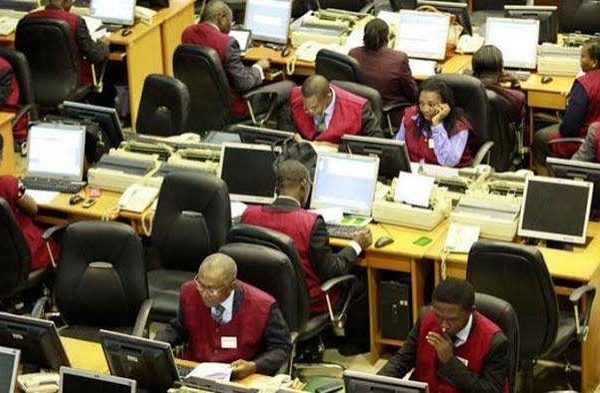
Such restraint may prove more difficult to sustain. Banks are likely to remain among the biggest purchasers of sovereign debt, especially considering that government securities offer a liquid, relatively low-risk outlet for funds, Quest Merchant Bank said in an emailed note to Daily Sun.
The bank said the strong demand at the auction showed expectations were rising that yields may have peaked after inflation had moderated recently and the prospect of a sustained disinflationary trend.
Therefore, as it said, investors are eager to capture higher yields, especially at the long end of the curve.
But industry experts said an aggressive sovereign borrowing program could absorb liquidity that could have otherwise gone to corporate lending, trade finance and consumer credit.



The risk is even higher for smaller firms, which already have to deal with high lending rates and limited access to formal credit. Banks have reduced incentive to lend to riskier businesses if they can earn close to 18 per cent on long-dated government debt, which carries lower credit risk and lower operational costs than private lending.
Pension funds and asset managers may also continue to favor long-dated sovereign paper as they attempt to lock in elevated returns before inflation and rates fall. This could strengthen the DMO’s funding program, but it would increase the financial system’s exposure to the sovereign when costs of servicing public debt are high relative to government revenues.
That said the agency still has a long way to go to meet its domestic funding target of about N29 trillion as provided for in the budget.
“We expect strong investor demand supported by easing inflation and expectations of a gradual decline in yields,” said Quest Merchant Bank.
The FG, therefore, finds itself in a narrow corridor of policy. It must fund a large deficit, maintain investor confidence and cope with a growing debt-service burden, without a borrowing strategy that starves the private sector of credit.
That ability of the DMO to keep that balance will determine not just the credibility of the budget but availability and cost of financing for Nigerian businesses.