Natural gas will be central to discussions at African Energy Week (AEW) 2026 on Africa’s booming artificial intelligence (AI) and data centre economy as policymakers, energy companies and technology investors look for reliable power solutions to overcome the continent’s enduring electricity challenges.
The issue will be discussed in a high level panel session under AEW’s new Renegade-Intel platform, “Beyond the Grid: Natural Gas and the Next Generation of African Data Centers”, to be held from October 12-16 in Cape Town.
The session will convene governments, energy producers, infrastructure developers, technology companies and investors to explore how gas-fired embedded generation can deliver reliable electricity for hyperscale data centres and other energy-intensive digital infrastructure.
Artificial intelligence is being adopted at a fast clip, and that is reconfiguring worldwide electricity demand as modern data centres require substantially more power than traditional facilities.
Data centre electricity consumption could double by 2030, according to industry estimates, with electricity demand from AI applications expected to triple as computing requirements continue to rise.
The increasing density of AI computing infrastructure, where racks of servers now consume several hundred kilowatts instead of the traditional 20 to 40 kilowatts, is compelling developers to concentrate on sites that can supply steady, high-quality baseload electricity without interruption.
For Africa, the issue has become ever more pressing, as the reliability of electricity remains one of the continent’s biggest economic challenges.
Africa, home to nearly 20 per cent of the world’s population, accounts for only about 0.6 per cent of global data centre capacity today.
Frequent power outages and unreliable electricity networks continue to discourage investment in digital infrastructure, with unreliable power estimated to cost African economies up to four per cent of gross domestic product annually.
This has made many developers look to captive or embedded power systems that lessen their reliance on national grids, and provide more operational certainty.
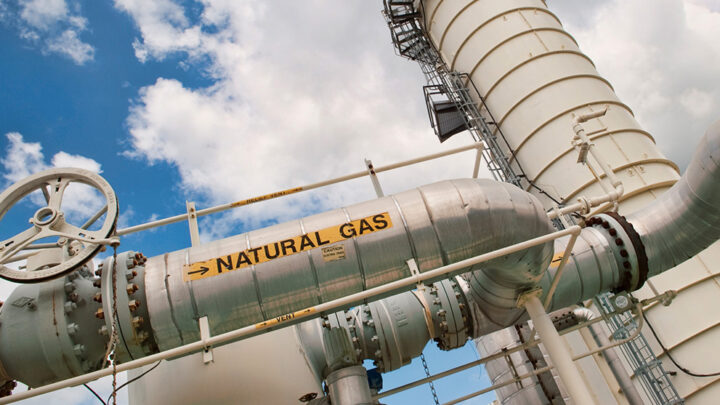
Natural gas has been one of the most viable options, especially in countries with abundant domestic gas resources.
The AEW panel will look at how dedicated gas-fired power plants with long-term fuel supply agreements and integrated infrastructure can offer predictable and cost-effective electricity for hyperscale computing facilities and create stable industrial markets for gas producers.
“Nigeria is increasingly positioning itself as a model for integrating natural gas, electricity generation and digital infrastructure.
One of the flagship projects is a $400 million development in Ogun State by Tetracore Energy Group, Huawei and Inspirive Technologies, which combines a 20-megawatt data centre with a dedicated 100-megawatt gas-fired power plant.
The project is an example of a growing “gas-to-compute” model, where domestic gas resources are turned directly into power to run cloud computing, artificial intelligence and digital services.
Nigeria’s emergence as a digital infrastructure hub in Africa is further strengthened by other investments including the Kasi Cloud Campus and more private-sector data centre developments.
Nigeria, possessing one of the continent’s biggest proven natural gas reserves, is ideally positioned to unlock new domestic demand for gas via long-term supply deals with digital infrastructure developers, adding to existing gas-to-power, industrial and export markets.
South Africa, already Africa’s biggest data centre market, is also growing fast.


Read Also: Two Soldiers Injured as Military Repels ISWAP Attack in Borno
Equinix recently won approval for a 120,000 square metre data centre campus in Cape Town, which will require about 174 megawatts of electricity, underscoring the massive energy demands of next-generation computing infrastructure.
The expansion is also fueling calls for more diversified and reliable sources of electricity, with renewed interest in natural gas exploration in the Karoo Basin potentially providing an additional long-term energy solution.
In addition to supporting digital infrastructure, the convergence of natural gas and data centres offers significant commercial opportunities for African energy producers.
Long-term gas supply agreements with hyperscale operators could deliver stable industrial demand, improve project economics and unlock previously stranded gas resources.
The creation of integrated energy corridors with pipelines, power plants, fibre-optic infrastructure and data centres could encourage further industrial development, while also strengthening Africa’s digital economy.
Better digital infrastructure yields benefits to governments that are more than just about technology, including financial services, e-commerce, telecommunications, cloud computing, public-sector digitisation and AI-driven innovation.
Collaboration key to success
“Africa has the natural gas resources to support not just industrialisation but the digital economy that is expanding in Africa,” said NJ Ayuk, executive chairman of the African Energy Chamber.
“Africa has the natural gas resources to drive industrialisation and the digital economy, but unlocking that opportunity requires stronger collaboration between energy producers, technology investors and policymakers,” said Ayuk.
“This conversation reflects the growing importance of developing robust gas-powered infrastructure that can accommodate AI, hyperscale data centres and sustained economic growth across the continent.”
The Renegade-Intel platform is indicative of the growing convergence between energy, artificial intelligence, telecommunications and digital infrastructure. It underscores the growing role of oil and gas companies as strategic partners in Africa’s digital transformation.
As investment in hyperscale computing accelerates, experts say countries that can bring together abundant gas resources, reliable infrastructure, supportive regulation and long-term investment frameworks will be best placed to emerge as regional digital hubs.
The “Beyond the Grid” panel is expected to highlight one of Africa’s most promising investment opportunities, leveraging natural gas not only to power homes, factories and industries, but also to fuel the data centres and AI infrastructure that will underpin the continent’s future digital economy.