
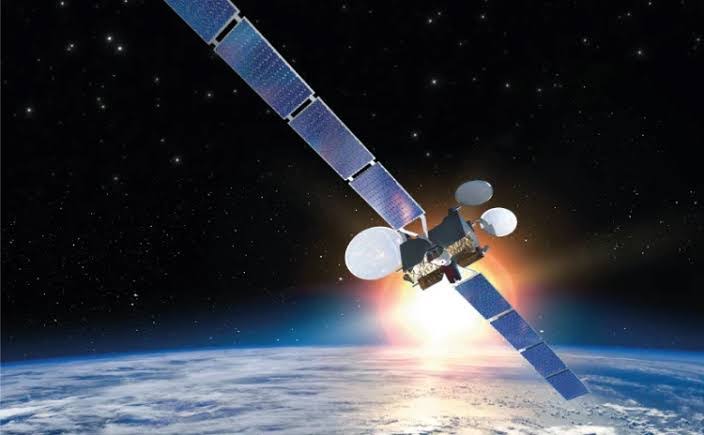
The Federal Executive Council (FEC) has approved the acquisition and deployment of two next-generation communications satellites, NIGCOMSAT-2A and NIGCOMSAT-2B, as part of efforts to expand Nigeria’s satellite capacity and improve digital connectivity.
The approval was disclosed by the Nigerian Communications Satellite Limited (NIGCOMSAT) in a statement signed by the Acting Head of its Corporate Affairs Division, Stephen Kwande.
According to the company, the two satellites will be deployed to strengthen Nigeria’s capacity in broadband services, broadcasting, enterprise connectivity and other critical communication services.
Satellites to Expand National Connectivity
NIGCOMSAT said the satellites would help extend connectivity to underserved, unserved and hard-to-reach communities across the country.
The additional satellite capacity is also expected to strengthen national communications resilience and expand Nigeria’s ability to deliver satellite-enabled digital services.
NIGCOMSAT will lead the implementation of the project under the supervision of the Federal Ministry of Communications, Innovation and Digital Economy.
The project forms part of the Federal Government’s broader investment in digital infrastructure and national connectivity under President Bola Ahmed Tinubu’s Renewed Hope Agenda.
NIGCOMSAT Highlights Expected Benefits
The Managing Director and Chief Executive Officer of NIGCOMSAT, Jane Egerton-Idehen, described the approval as a major milestone for the company and Nigeria’s digital infrastructure development.
Read Also: ‘Internet pressure made them marry’ – Carter Efe speaks on Peller, Jarvis relationship
She commended President Tinubu for the leadership and support that enabled the project to reach the approval stage.




Egerton-Idehen said NIGCOMSAT-2A and NIGCOMSAT-2B would strengthen the country’s satellite infrastructure, expand connectivity and support critical communication services nationwide.
She added that the company’s priority was to ensure that the investment delivers measurable benefits to Nigerians while positioning NIGCOMSAT for greater participation in the global satellite and digital economy.
According to her, the additional satellite capacity will support high-capacity broadband, broadcasting, enterprise connectivity, government services and emerging digital applications.
The satellites are also expected to complement existing terrestrial broadband networks by providing wider coverage in locations where conventional telecommunications infrastructure is difficult or expensive to deploy.
The Federal Government’s approval marks another step in Nigeria’s efforts to strengthen its digital infrastructure and improve access to reliable communications services across the country.







1 Comment