Former Chief of Defence Staff, General Martin Luther Agwai (rtd), has urged military leaders to adopt dialogue, confidence-building, stakeholder engagement and reconciliation as key mechanisms for resolving conflicts and sustaining peace.
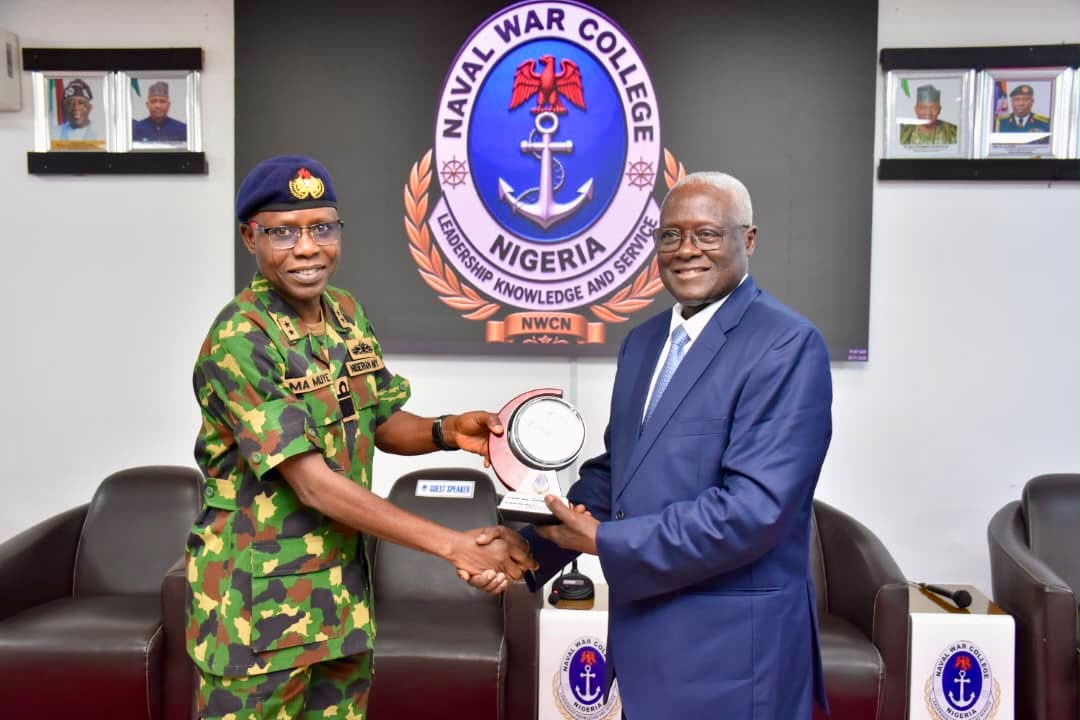
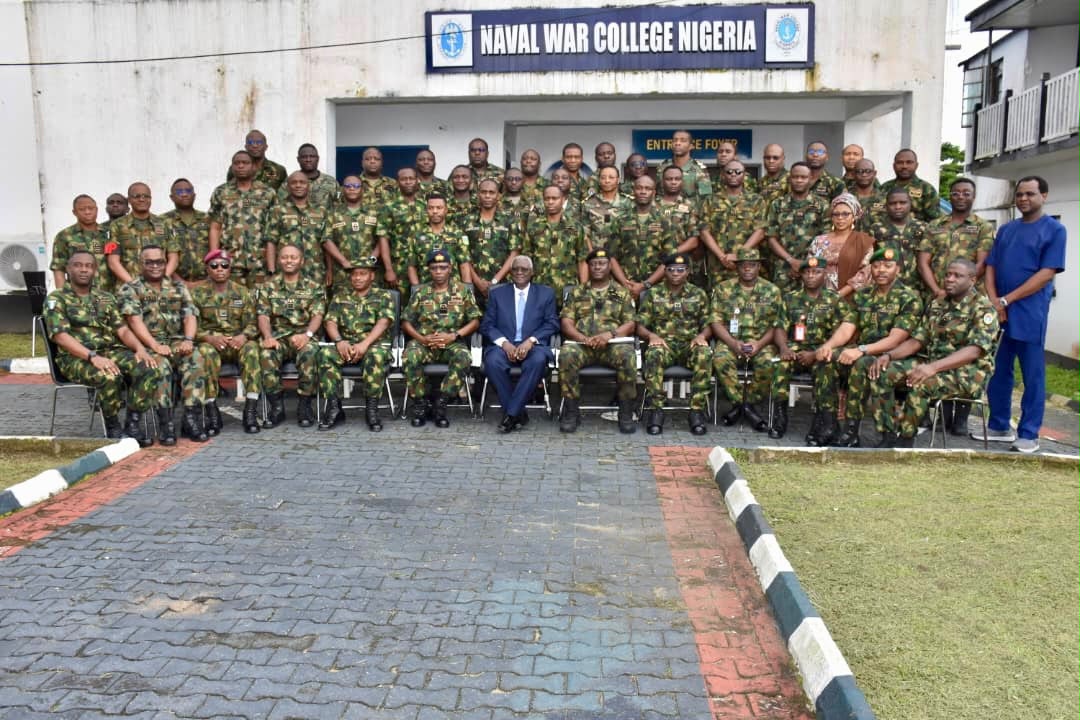
General Agwai gave the advice on Friday, August 21, 2026, while delivering a strategic lecture titled “Introduction to Conflict Resolution Mechanisms” to participants of Naval Warfare Course 10 at the Naval War College Nigeria (NWCN).
The lecture, held at the College Auditorium, formed part of the Peace Support Operations Module of the course and was designed to expose participants to various conflict resolution mechanisms and practical lessons from the retired general’s extensive military and international peace support engagements.
General Agwai explained that conflict resolution involves approaches aimed at addressing the root causes of disputes, managing tensions and restoring sustainable peace. He distinguished between conflict prevention, conflict management, conflict resolution and conflict transformation, stressing that the appropriate mechanism should be determined by the nature and stage of a conflict, the actors involved, power relations, willingness to negotiate, legitimacy, cultural context and available resources.
Speaking on the military application of conflict resolution, the former CDS identified negotiation, liaison, community engagement, civil-military coordination and protection of civilians as important tools available to commanders.
He warned that poorly managed conflicts could lead to civilian casualties, displacement, loss of public confidence and increased recruitment into armed groups. He also highlighted problem-solving processes, confidence-building measures, restorative justice and transitional justice as important approaches to conflict resolution.
Drawing from his experiences in international peace support operations, particularly in Sierra Leone and Darfur, General Agwai emphasised the importance of dialogue, disarmament, reintegration, stakeholder engagement and reconciliation in rebuilding conflict-affected societies.



He observed that contemporary insecurity had assumed diverse dimensions, including physical, economic, digital and social threats, requiring leaders to adopt broader and more adaptive approaches to security challenges.
The retired general further stressed the importance of visionary leadership in addressing an increasingly complex and uncertain security environment. According to him, leaders must be able to look beyond immediate challenges while anticipating emerging threats and opportunities.
In his remarks, the Commandant of the Naval War College Nigeria, Rear Admiral M. A. Muye, appreciated General Agwai for what he described as an insightful and thought-provoking lecture, describing the presentation as “academy plus experience.”
Rear Admiral Muye noted that General Agwai’s decades of military and international service made him an exceptional resource person for the course. He also commended the former CDS for his sacrifices and courage during peace support operations, particularly his engagements with parties to conflicts and rebel groups under challenging circumstances