
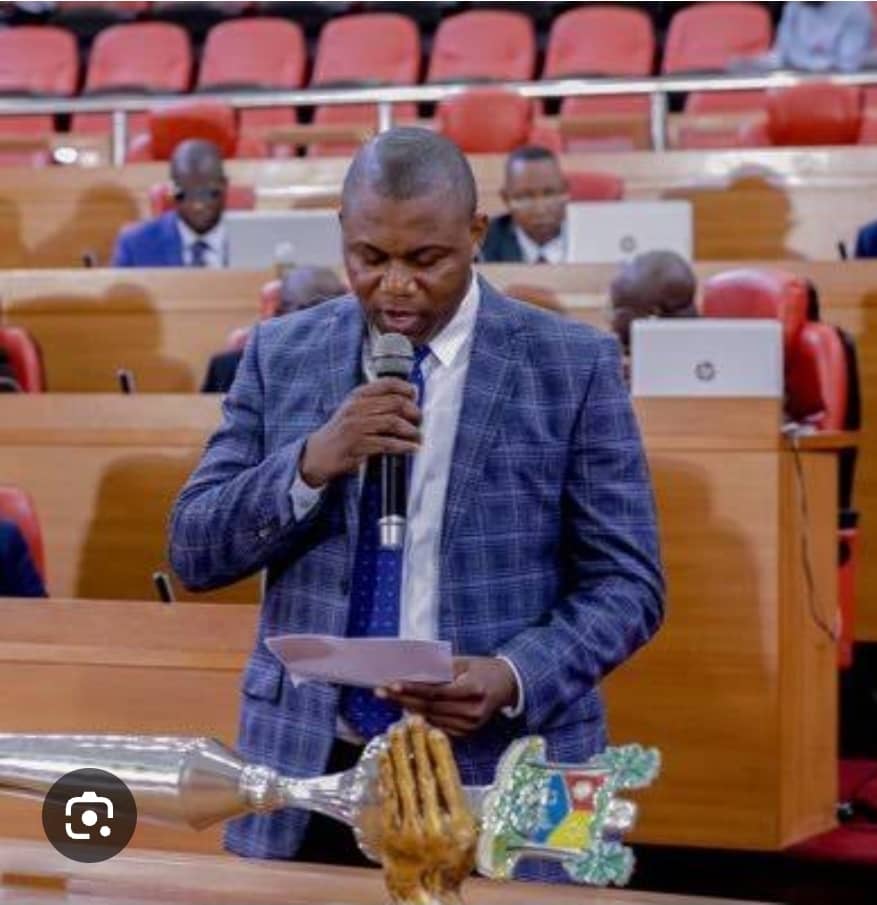
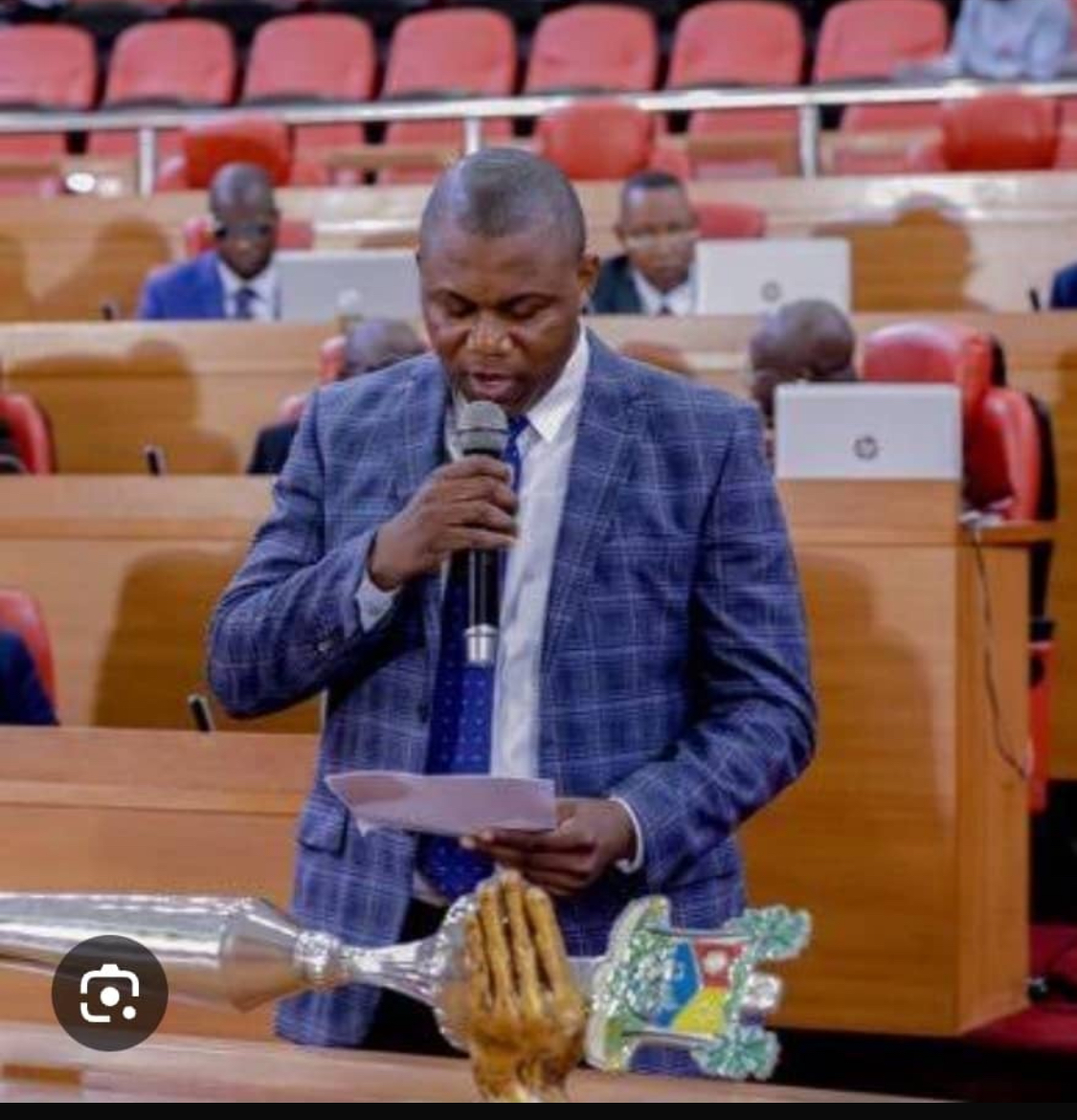
 LAND DISPUTE: PRINCE SHEKONI ALO TAKES LAGOS ASSEMBLY TO COURT, CHALLENGES ALLEGED LEGISLATIVE INTERFERENCE IN GOVERNMENT ALLOCATION
Abijo Prince Questions Assembly’s Authority Over Governor-Granted Land, Seeks Judicial Restraint
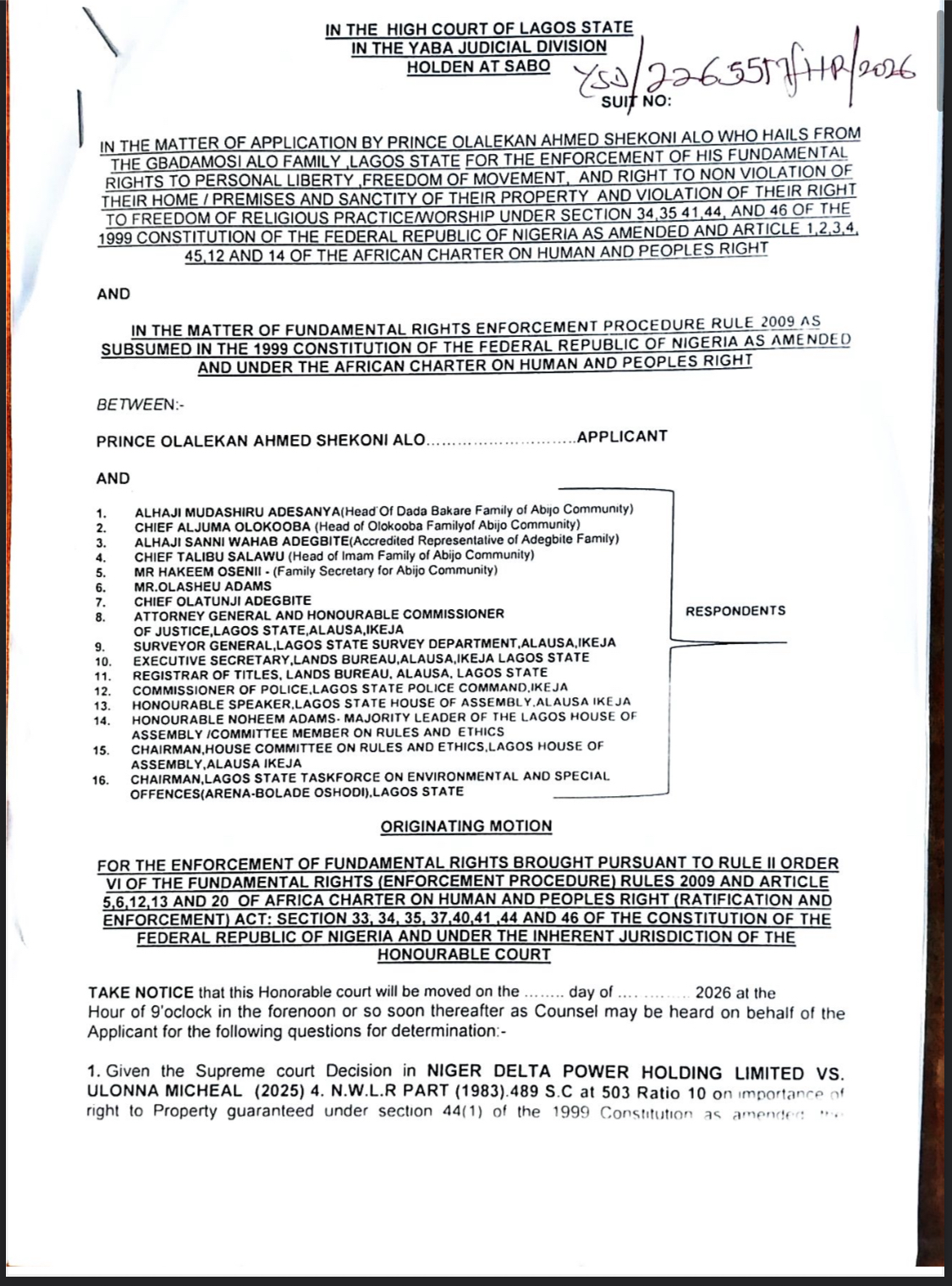
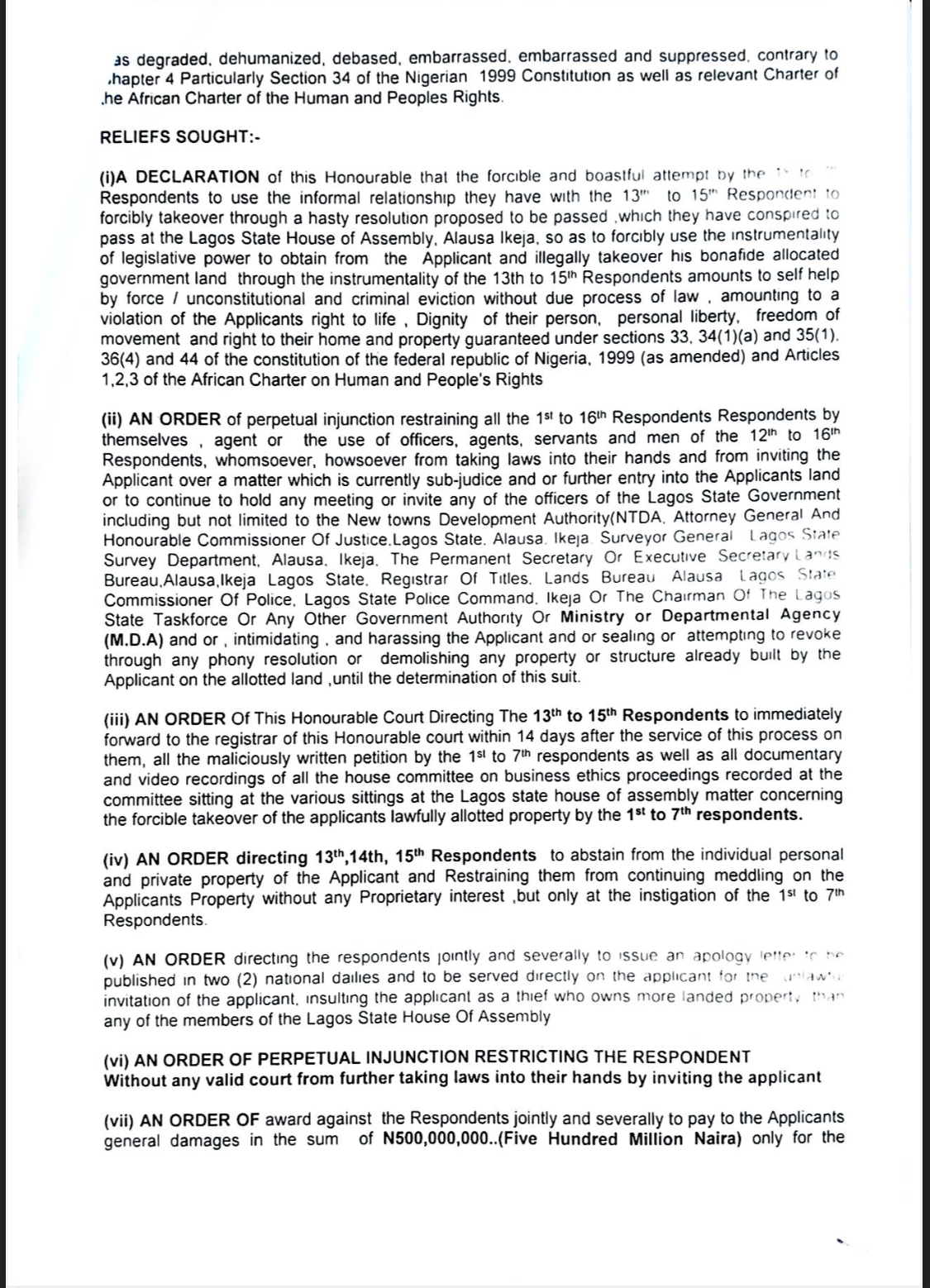
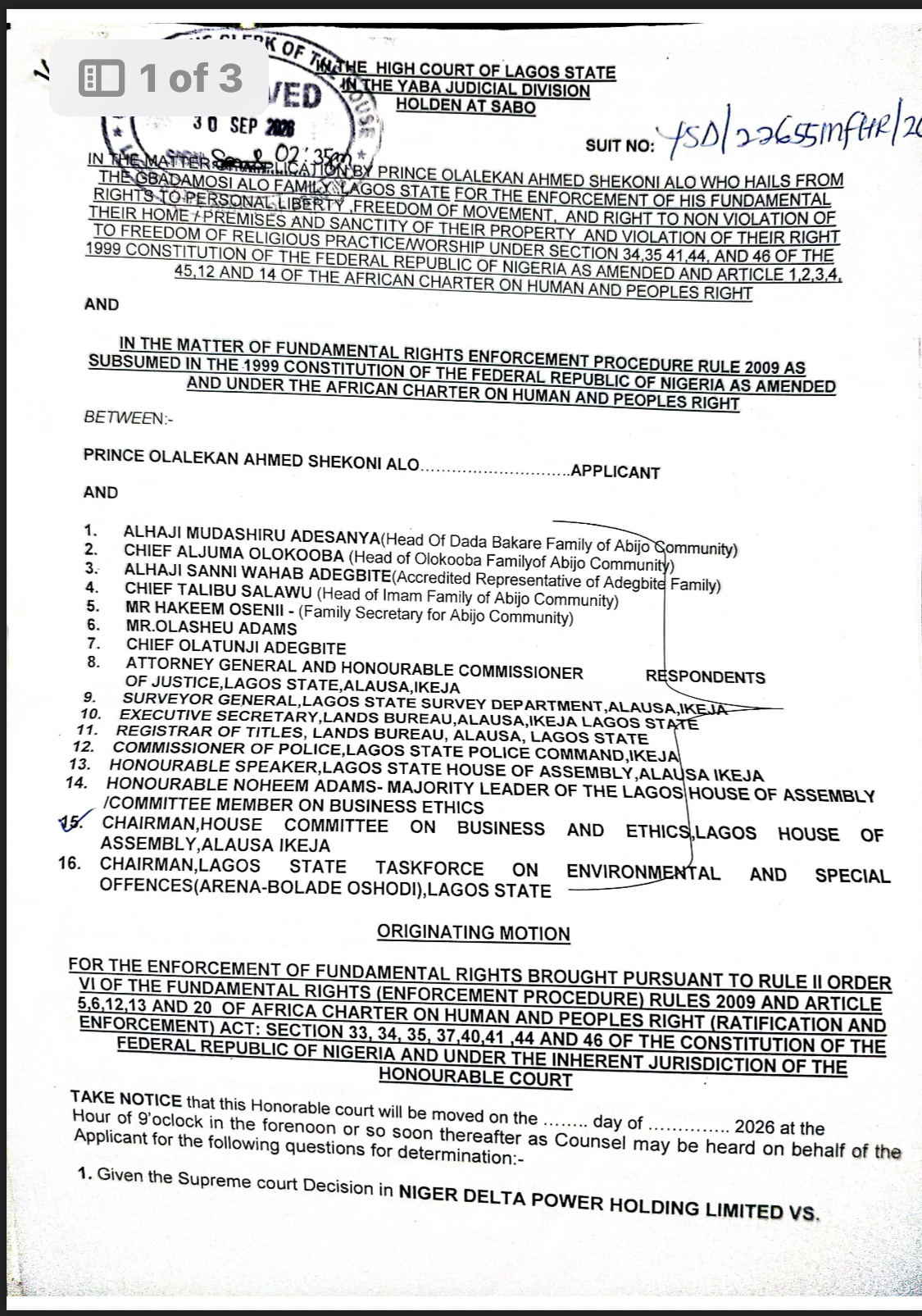
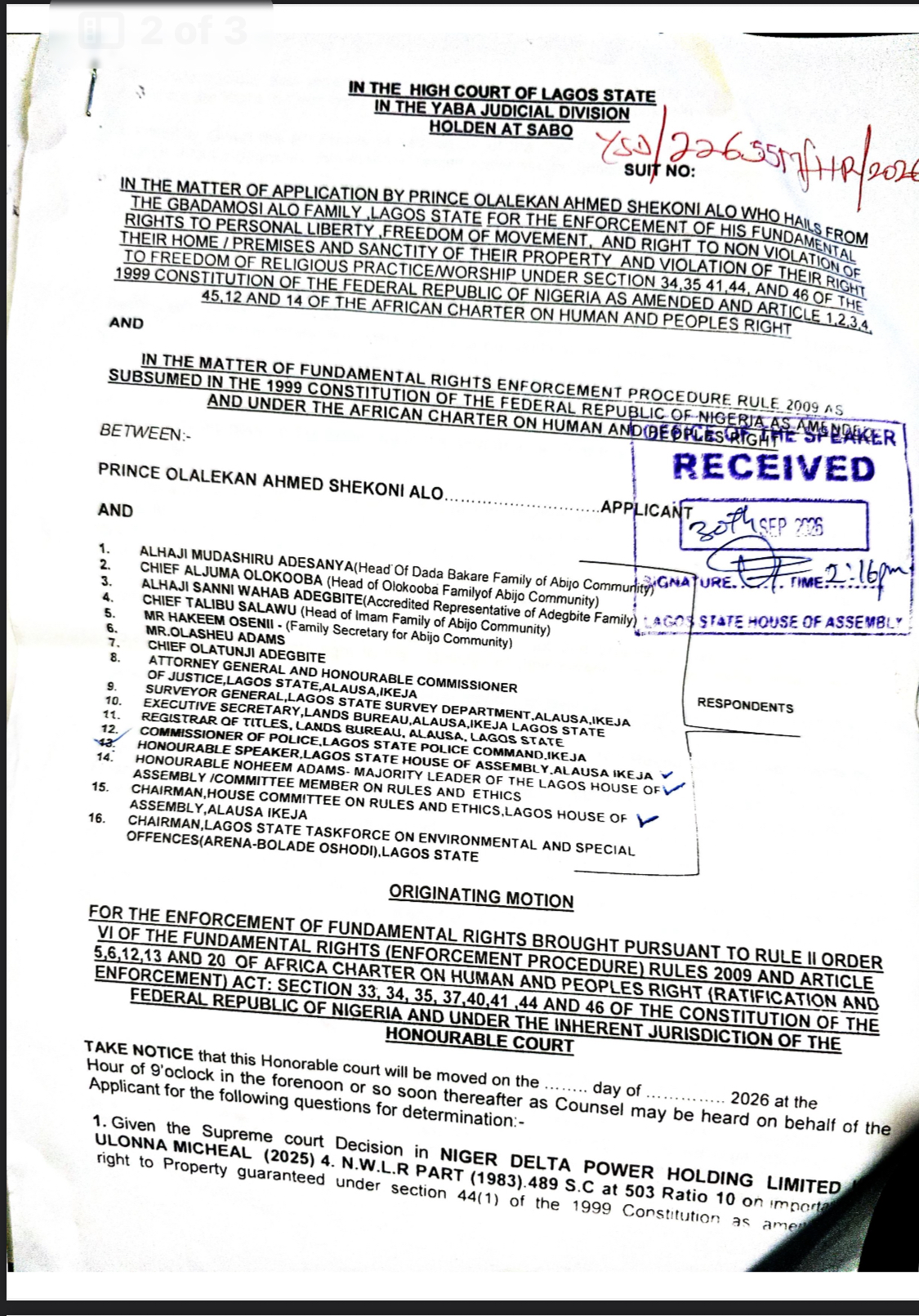
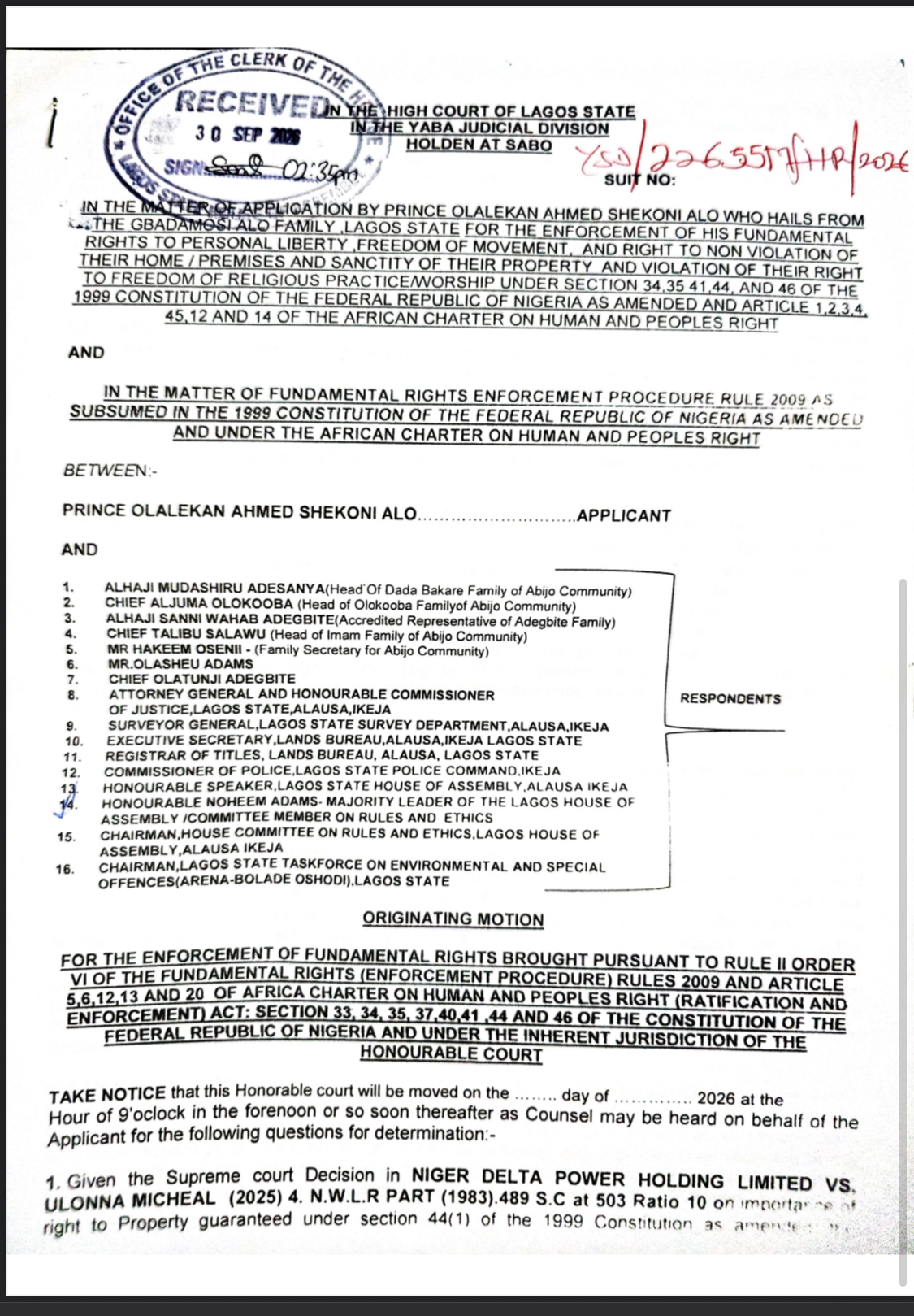
A fresh legal battle is brewing in Lagos State as Prince Ahmed Olalekan Hamed Shekoni Alo of Abijo Community, Ibeju-Lekki, has dragged the leadership of the Lagos State House of Assembly and several other respondents before the High Court of Lagos State over an alleged attempt to interfere with land lawfully allocated to him by the Lagos State Government.
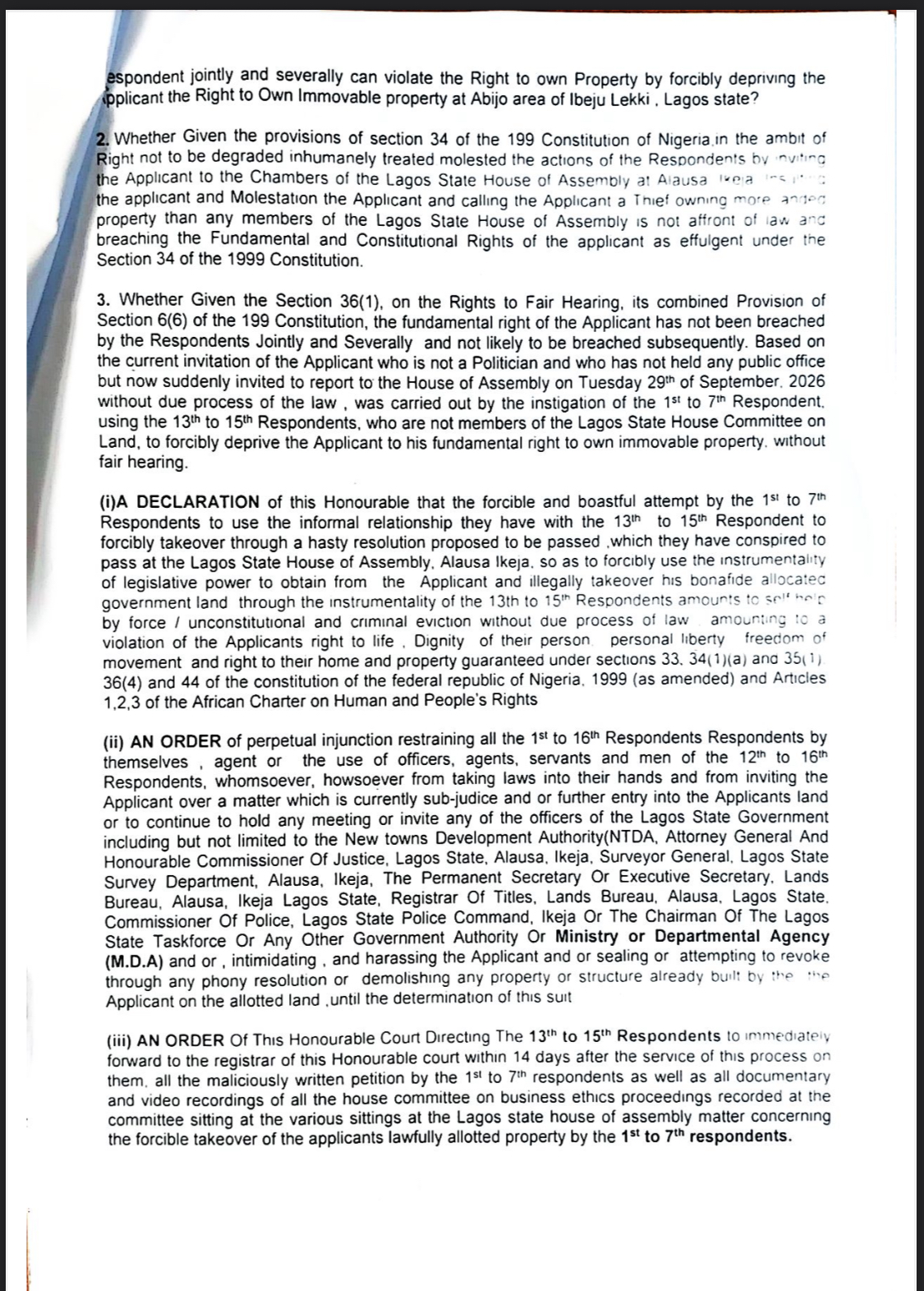
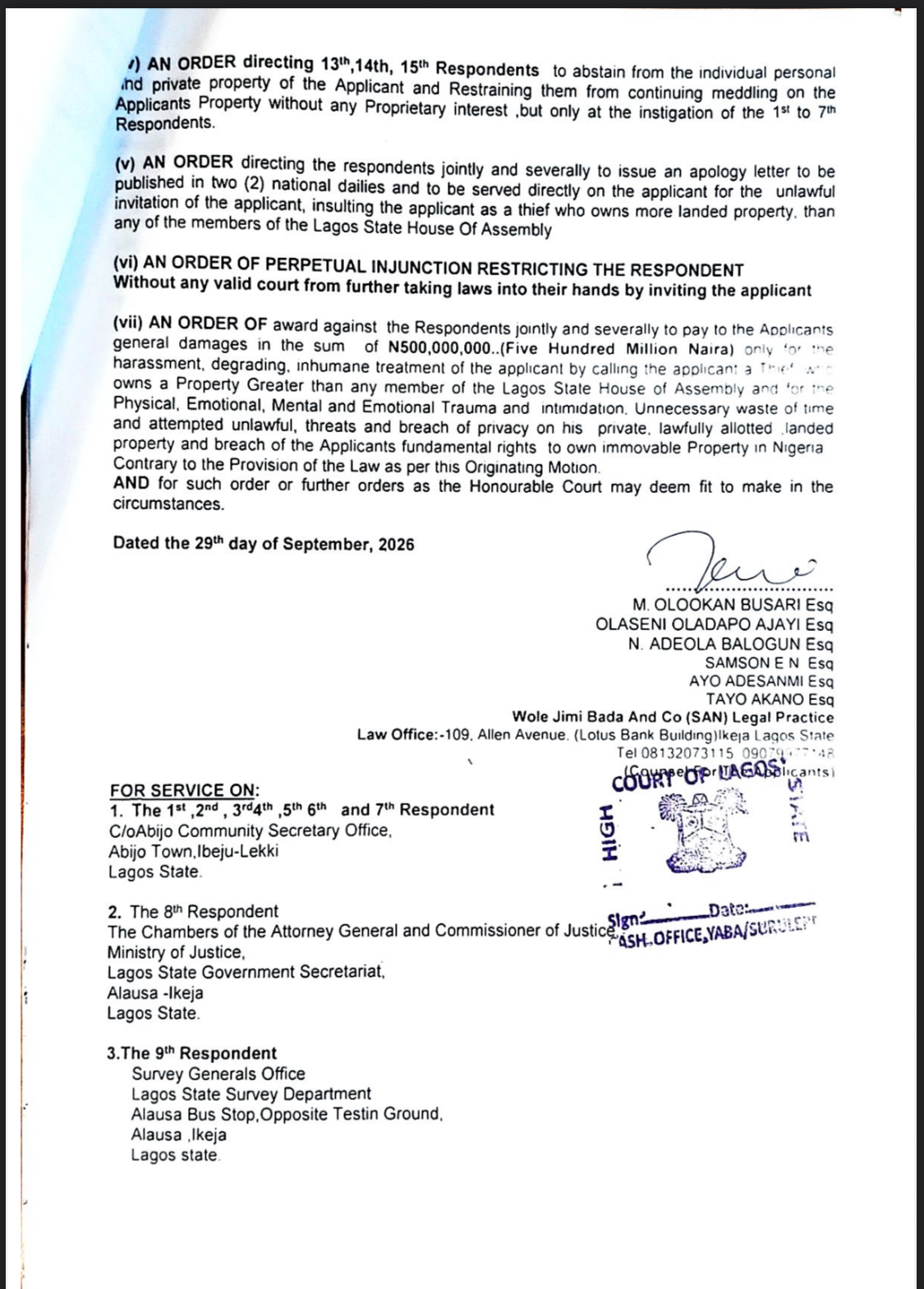
The suit, No. YSD/22655/MFHR/2026, raises fundamental constitutional and administrative questions over the limits of legislative intervention in matters concerning land allocation, executive powers and the protection of property rights.
At the centre of the dispute is a parcel of land at Abijo, which Prince Shekoni Alo says was duly allocated to him and his cousin, Prince Ahmed Olalekan Shekoni Alo, by the Lagos State Government after satisfying the statutory requirements attached to the allocation.
The claimant contends that the relevant government documents—including an allocation letter, survey documents, evidence of statutory payments and documentation relating to his application for title—demonstrate that the allocation was made through the appropriate government channels.
He is now asking the court to determine whether members of the Lagos State House of Assembly, acting through the House Committee on Rules and Business, can lawfully intervene in, or seek to influence the revocation of, a land allocation granted by the executive arm of government.
A CONSTITUTIONAL SHOWDOWN OVER LAND?
The legal action has brought into sharp focus the doctrine of separation of powers and the respective constitutional responsibilities of the Executive and Legislature.
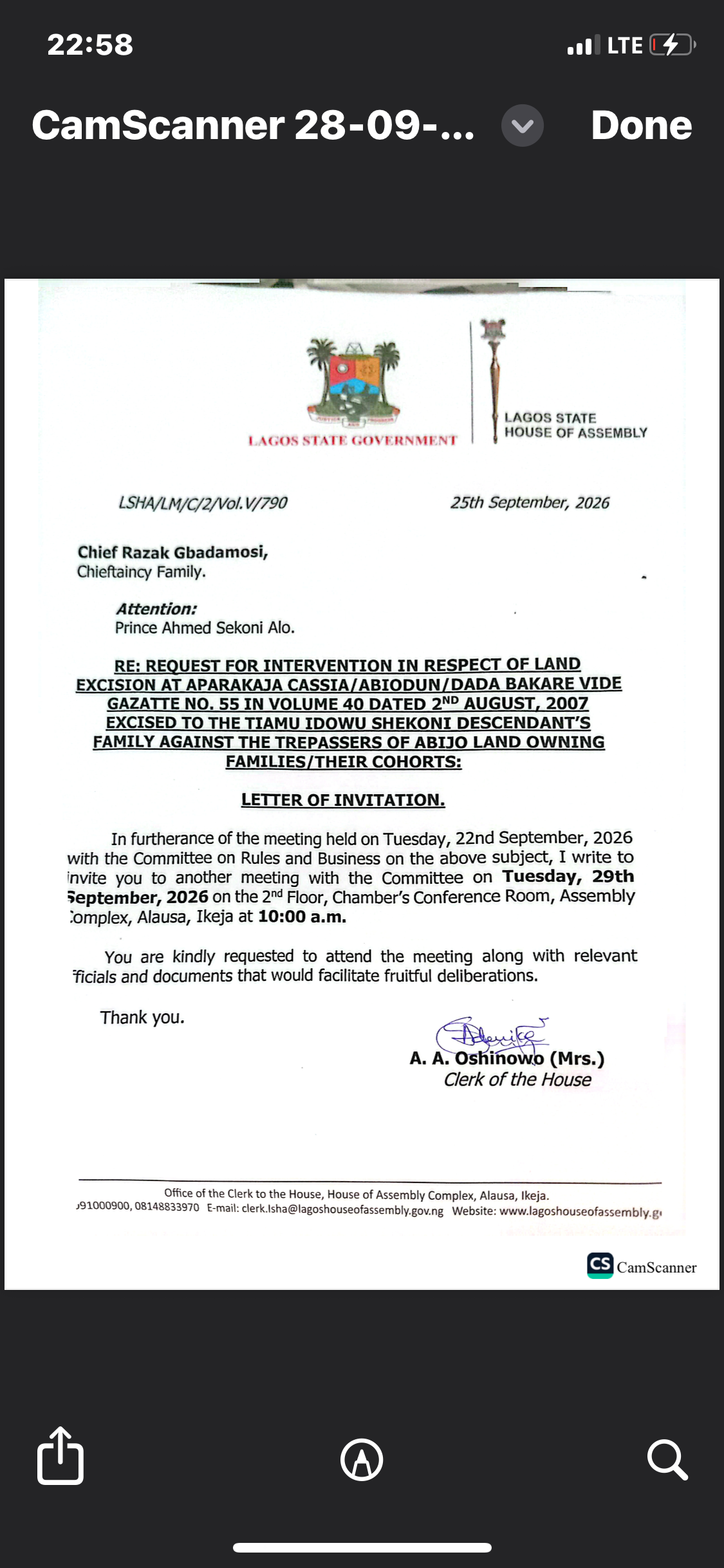
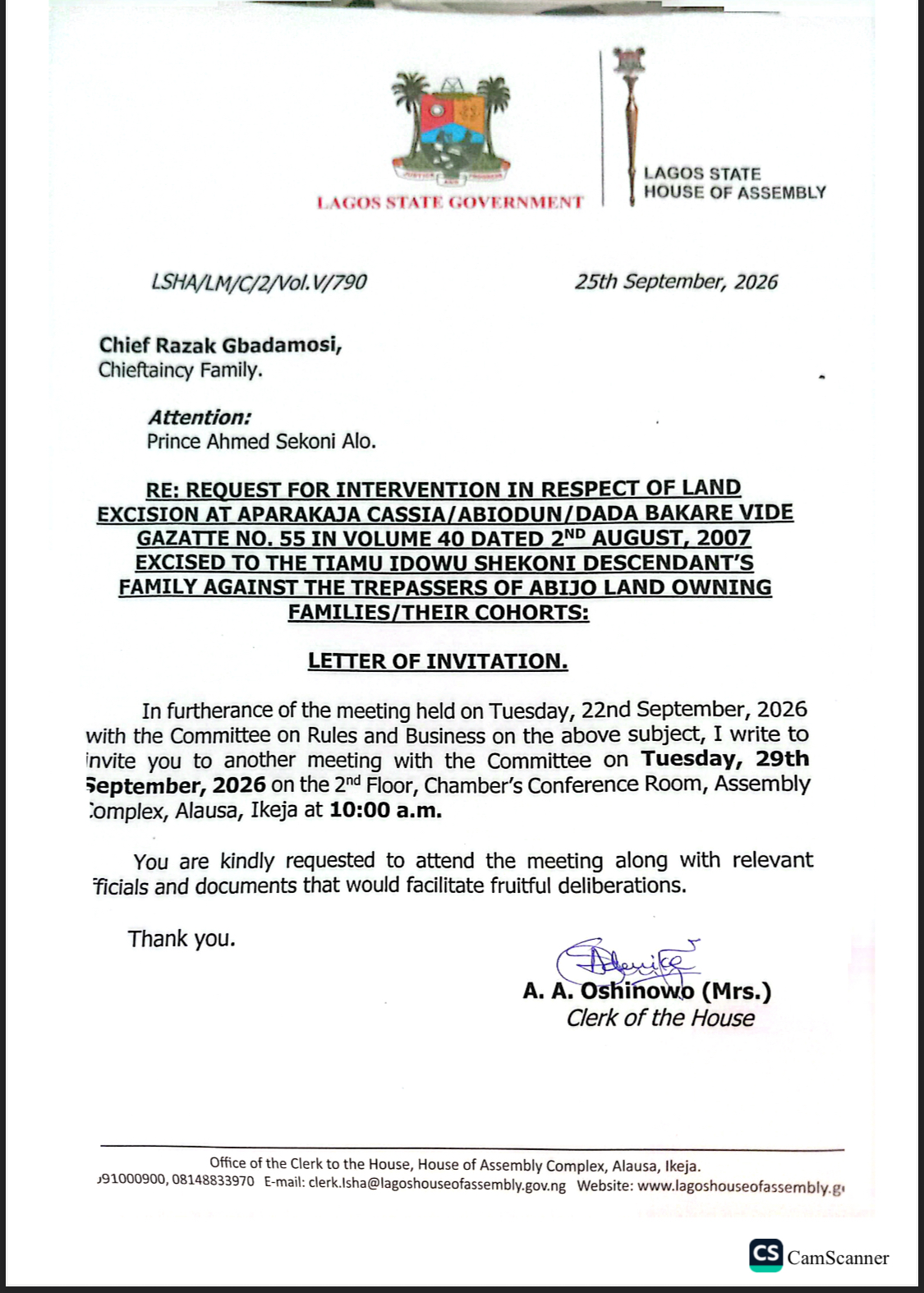
Prince Shekoni Alo alleges that he was repeatedly summoned before the House Committee on Rules and Business, where he claims he was questioned about the circumstances surrounding his acquisition of the government allocation.
According to his account, the proceedings became particularly contentious when he was allegedly questioned about his age, the source of the money used to obtain the allocation and how he was able to secure the land.
He further alleges that he was subjected to ridicule and treated in a manner he considered degrading during the proceedings.
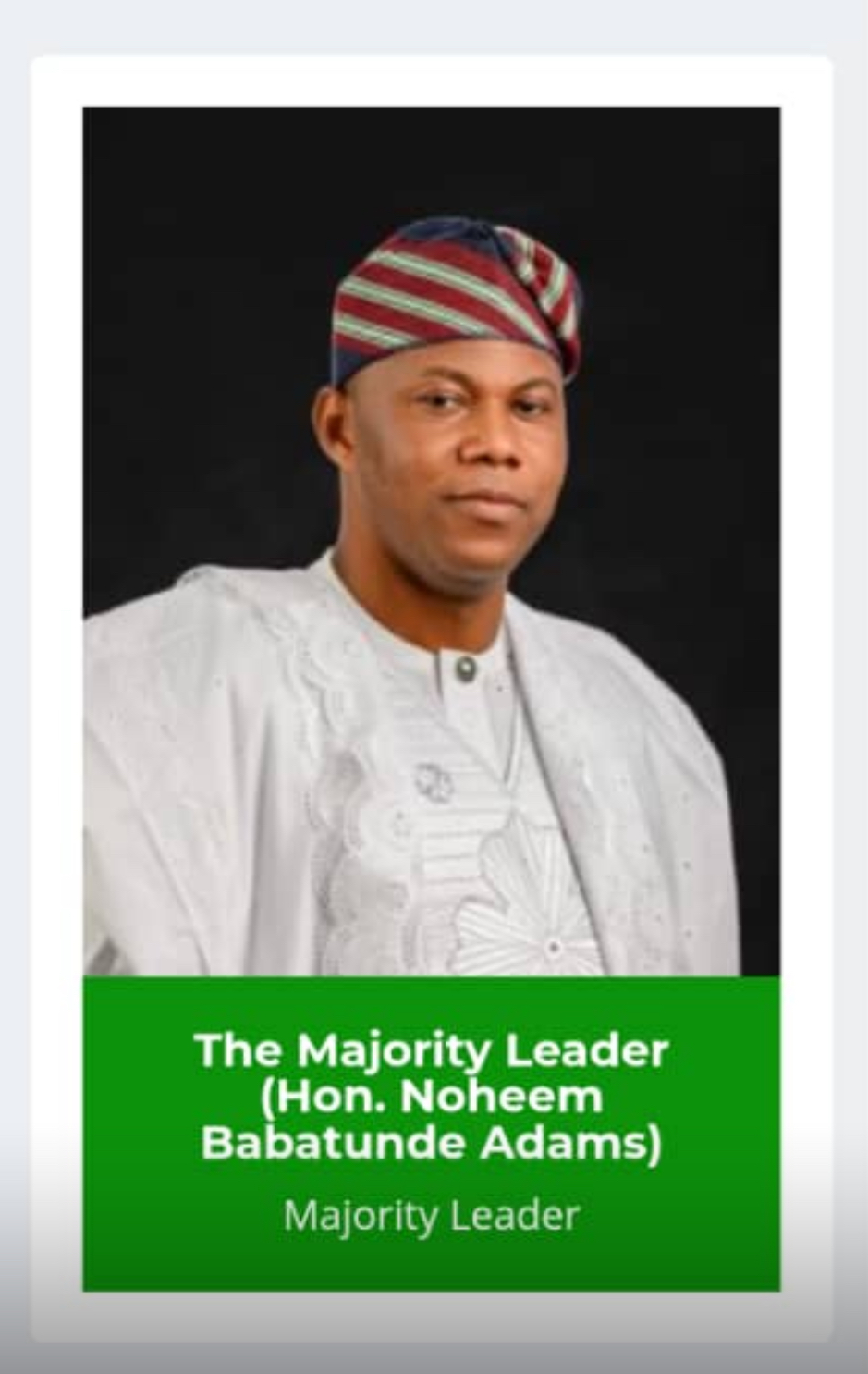 The claimant specifically identifies Hon. Noheem Adams, Majority Leader of the Lagos State House of Assembly and Chairman of the House Committee on Rules and Business, as the member who presided over the meeting in question.
The allegations remain matters for determination by the court.
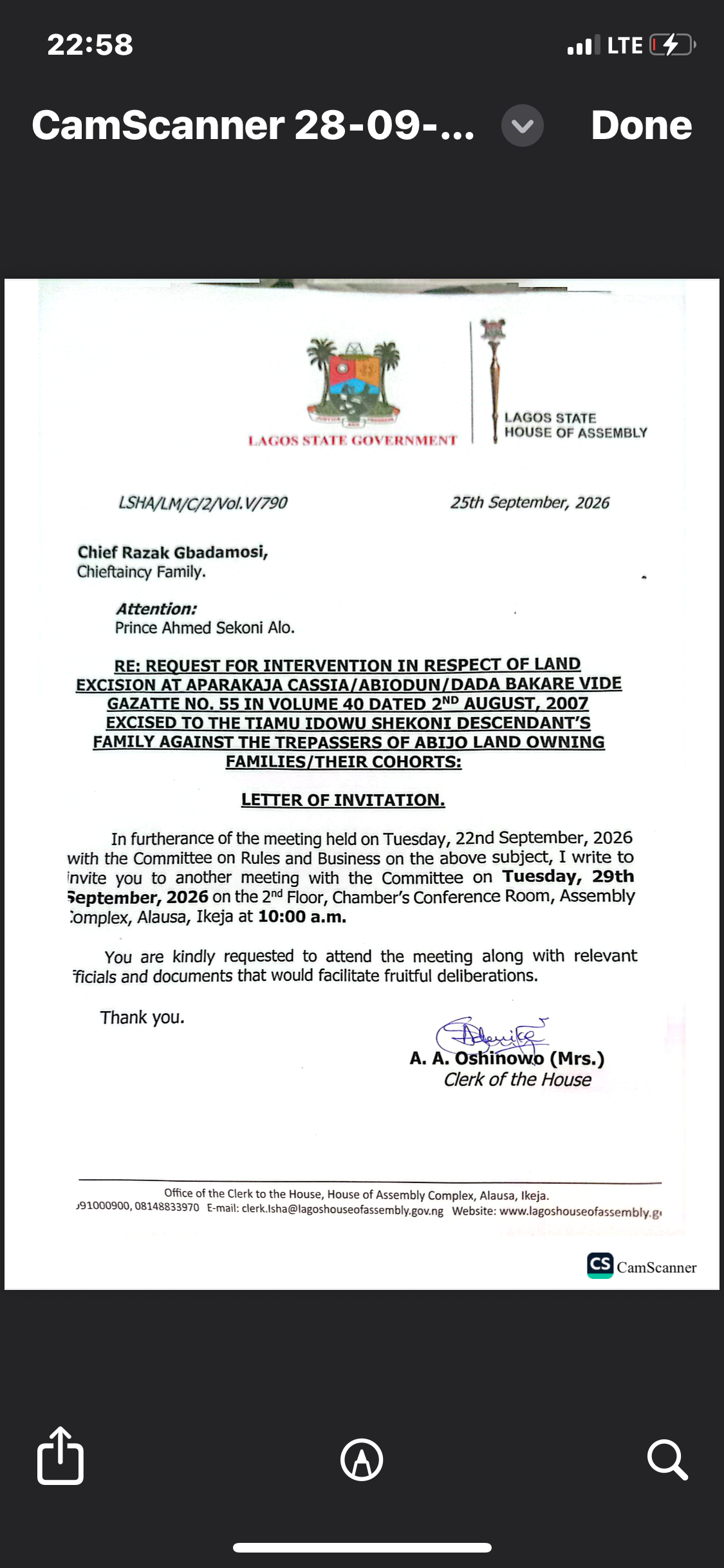 CAN THE LEGISLATURE REVOKE AN EXECUTIVE LAND ALLOCATION?
The central question now before the court is not merely about one parcel of land.
It potentially touches on a much broader constitutional issue:
Where the Executive Government of Lagos State has lawfully allocated land to a citizen, what legal authority does the Legislature possess to interfere with, reverse or compel the revocation of that allocation?
Prince Shekoni Alo argues that the Legislature cannot assume executive powers or employ a legislative resolution as a substitute for the statutory procedures governing land administration.
He maintains that any attempt to compel agencies responsible for land administration—including the Lands Bureau, Surveyor-General’s Office, Lands Registry and other relevant authorities—to revoke or interfere with his title would amount to an unlawful encroachment into executive functions.
The claimant is therefore asking the court to restrain the respondents from taking further steps in respect of the disputed land and from using the proceedings of the House Committee to interfere with his alleged rights pending the determination of the substantive issues.
ABijo HISTORY ALSO FEATURES IN THE DISPUTE
Beyond the constitutional arguments, the case also carries a strong traditional and community dimension.
Prince Shekoni Alo identifies himself as a direct descendant of the lineage traditionally associated with the early settlement and founding of Abijo Community and as the Head of the Gbadamosi Alo Chieftaincy Family of Abijo.
The suit reportedly contains documents which the claimant says support his family’s historical connection to the community.
He also relies on previous judicial proceedings and other documents which, according to him, raise questions about the claims of certain individuals to Abijo ancestry and citizenship.
Among those named as respondents are Alhaji Hakim Oseni, Mudashiru Adesanya, Talibi Salawu, Aljumah Olokoba, Nosiru Adegbite and Olashehu Adams, alongside the Commissioner of Police, Lagos State; the Attorney-General of Lagos State; and the Chairman of the Lagos State Task Force.
THE OLASHEHU ADAMS CONTROVERSY
A particularly contentious aspect of the claimant’s case concerns allegations involving Olashehu Adams and his relationship with Hon. Noheem Adams.
Prince Shekoni Alo alleges that Olashehu Adams has been opposed to his continued possession of the disputed land and further alleges that he boasted of having sufficient political influence within the House of Assembly to facilitate action against the claimant.


These allegations have not been established by the court.
The claimant also refers to an earlier judgment which he says questioned the late father of Olashehu Adams’ claim to being a citizen of Abijo.
He further alleges that there was a prior understanding involving the Abijo community and the Lagos State Government under which parties agreed not to disturb government allottees.
According to the claimant, that understanding should extend to his own government allocation.
 FROM ALLOCATION LETTER TO COURTROOM
The claimant’s position is straightforward: if the Lagos State Government lawfully granted him the land and he complied with the statutory requirements attached to that grant, any attempt to dispossess him must follow due process and the applicable law.
He argues that a legislative committee cannot simply substitute itself for the government agencies legally responsible for land administration.
The case therefore raises questions that extend beyond Abijo:
Who has the legal authority to allocate land in Lagos State?
Can a legislative committee compel the revocation of an allocation made by the Executive?
Can a Certificate of Occupancy or other government title be set aside through legislative intervention without due process?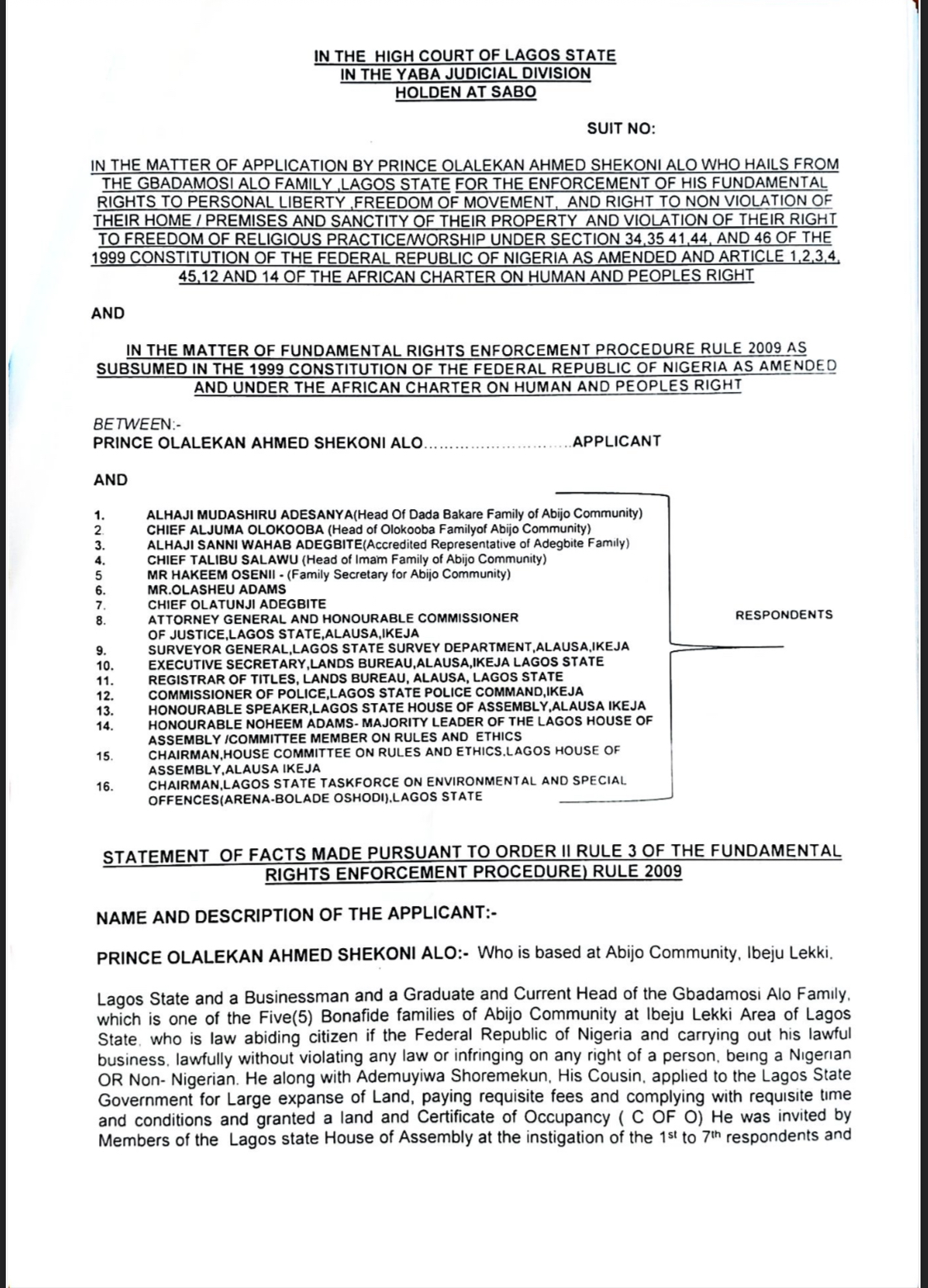
Where does legislative oversight end and executive authority begin?
And perhaps most importantly:
IS THE DOCTRINE OF SEPARATION OF POWERS BEING TESTED IN LAGOS?
Those are questions the court may ultimately be required to answer based on the applicable constitutional and statutory provisions and the evidence presented by all parties.
For Prince Shekoni Alo, the lawsuit represents a challenge to what he describes as an attempt by legislative actors and community interests to interfere with property he says was legitimately granted to him by the Lagos State Government.
For the respondents, their respective positions will ultimately be tested through the judicial process.
As the matter progresses, the courtroom—not the House floor—may become the decisive arena for determining the limits of legislative oversight, executive authority and the rights attached to government land allocations in Lagos State.
The case is now one to watch.



1 Comment