
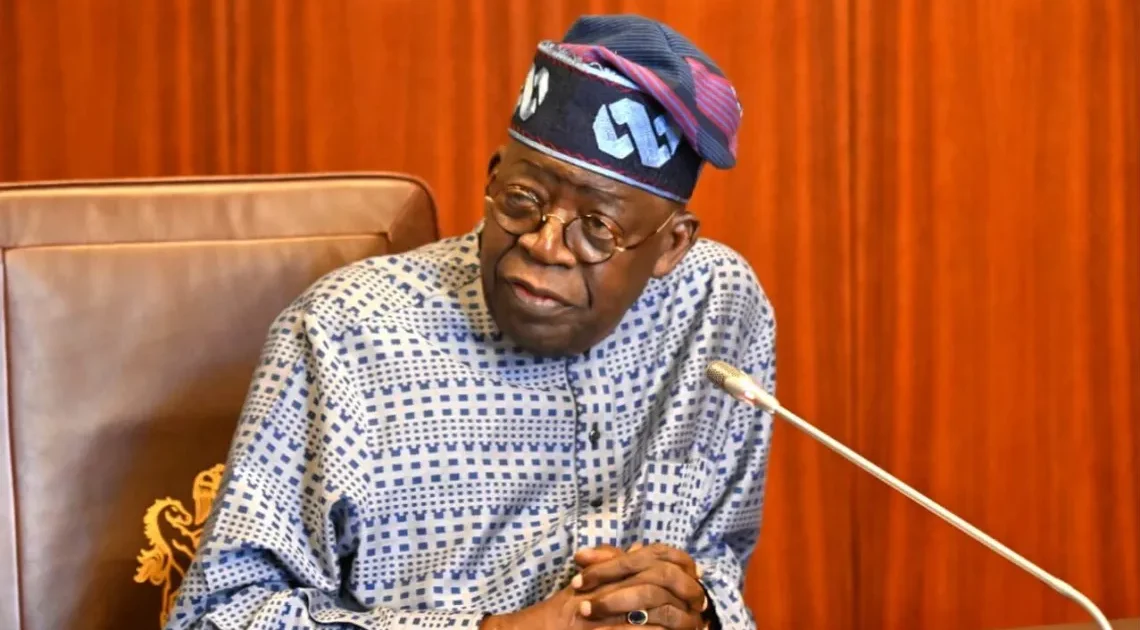
President Bola Ahmed Tinubu has urged state governors to use increased government revenues responsibly and prioritise projects that directly improve Nigerians’ living standards, particularly in healthcare, education and infrastructure.
The President made the call while reacting to the World Bank’s October 2026 Nigeria Development Update, titled “Beyond the Federal Purse: How Higher Revenues Reshaped State Priorities.”
According to a statement issued on Sunday by his Special Adviser on Information and Strategy, Bayo Onanuga, Tinubu said economic reforms introduced since 2023 had increased government revenues and created more opportunities for investment across the federal, state and local governments.
The World Bank report indicated that federation revenues increased by 69 per cent in real terms between 2023 and 2025, with state governments emerging as the largest beneficiaries.
It also found that state governments increased capital expenditure by 151 per cent in real terms during the period, directing much of the additional spending towards roads, transport infrastructure, agriculture, energy and housing.
According to the report, 29 of 33 states shifted their spending towards economic infrastructure, while real social spending per person increased in all but one state.
Reacting to the findings, Tinubu urged governors to ensure that the additional resources translate into measurable improvements in citizens’ welfare.
“I urge state governments to use their higher revenues more prudently and prioritise projects that improve the living standards of Nigerians, and the health and education of our people,” the President said.
Tinubu also welcomed the report, describing its findings as evidence that his administration’s economic reforms were producing results and helping to strengthen the country’s economic outlook.
The World Bank report showed that Nigeria’s economy grew by 4.2 per cent in the first half of 2026, compared with 3.9 per cent during the corresponding period in 2025. It projected average economic growth of at least 4.4 per cent between 2026 and 2028.
The report further indicated that Nigeria’s poverty rate had stabilised for the first time since 2019, while projecting a gradual decline as economic growth outpaces population growth.
However, the President acknowledged that further efforts were required to ensure that the benefits of economic reforms translate into better living conditions for households, particularly through lower food prices and more employment opportunities for young Nigerians.
“The dividends of reform are becoming visible. But more work remains to ensure they fully translate into better living standards for every household, starting with lower food prices and decent jobs for our young people,” he said.
Tinubu reaffirmed his administration’s commitment to inclusive economic growth under the Renewed Hope Agenda. He said the government would expand targeted cash transfers, accelerate the deployment of compressed natural gas (CNG), boost agricultural productivity and improve access to affordable healthcare and quality education.
The President also stated that targeted cash transfers had reached more than 10 million households.
He commended the Economic Management Team, led by the Minister of Finance and Coordinating Minister of the Economy, as well as state governors and other stakeholders, for their cooperation in implementing the reforms.
Tinubu said his administration would sustain its economic reform programme under the Renewed Hope Agenda 2.0, with a focus on expanding shared prosperity and ensuring that economic gains translate into improved living standards across the country.

1 Comment